
This title stems from multiple visits, discussions, and moments over the last year. What started as a random question to understand academic texts eventually turned into an almost philosophical panel discussion in my brain.
I have a very keen interest in history and archaeology, especially the ancient past. When an opportunity comes to interact with history, I jump at it. In December 2025, I visited the petroglyphs, or rather geoglyphs, of Kudopi, in Maharashtra State. Having seen the other sites in Goa and Ratnagiri, I was curious to understand what this site held.
Kudopi was a different experience. As we moved through the site, we discussed the sheer genius of the craftsmanship. One carving was particularly striking, aptly described by my colleague Onkar as having a “logo finish”—a precision that felt impossibly modern. Another colleague had a profound moment with a carving often identified as a “mother goddess,” a personal offering of haldi-kumkum (turmeric-vermillion) to venerate the site.
This brought my question to the forefront: whose history is this?
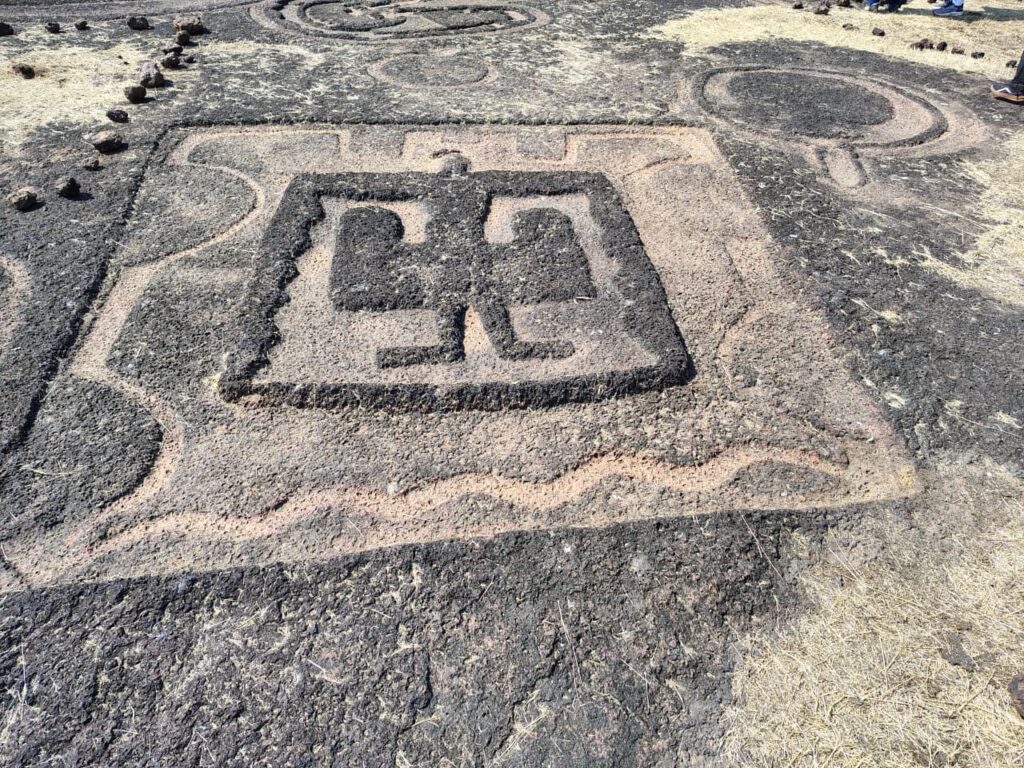
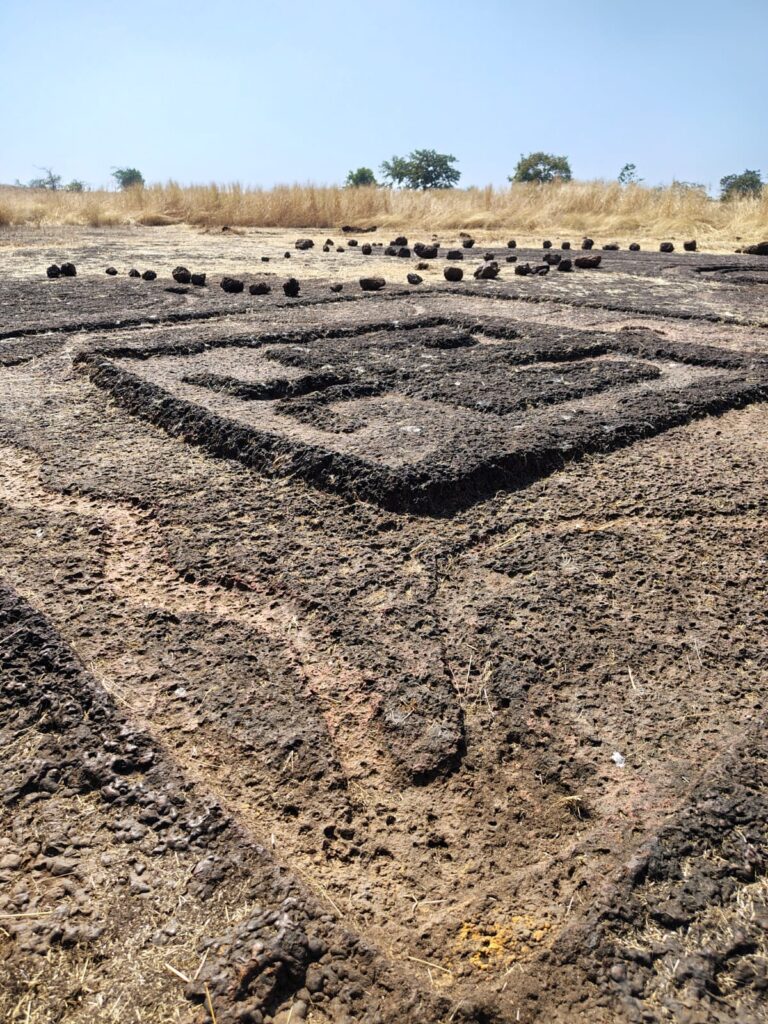
None of us are from the land as we now know within these geological boundaries, nor were we participants in the culture that is associated with this history. So then, what gives us this connection and the right to call history “ours”? When I visited the rock art site at Anegudi, it was interesting to see how the historical site was part of “private property.” While it was open to the public, the concept of ownership of history felt ironic to me.
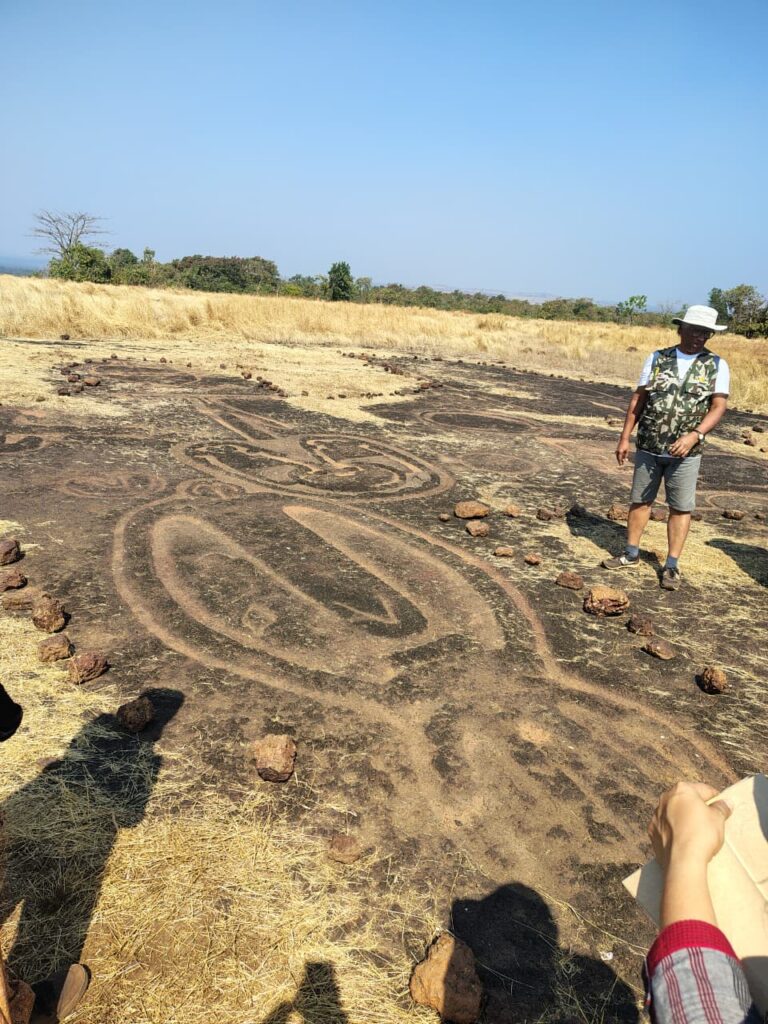
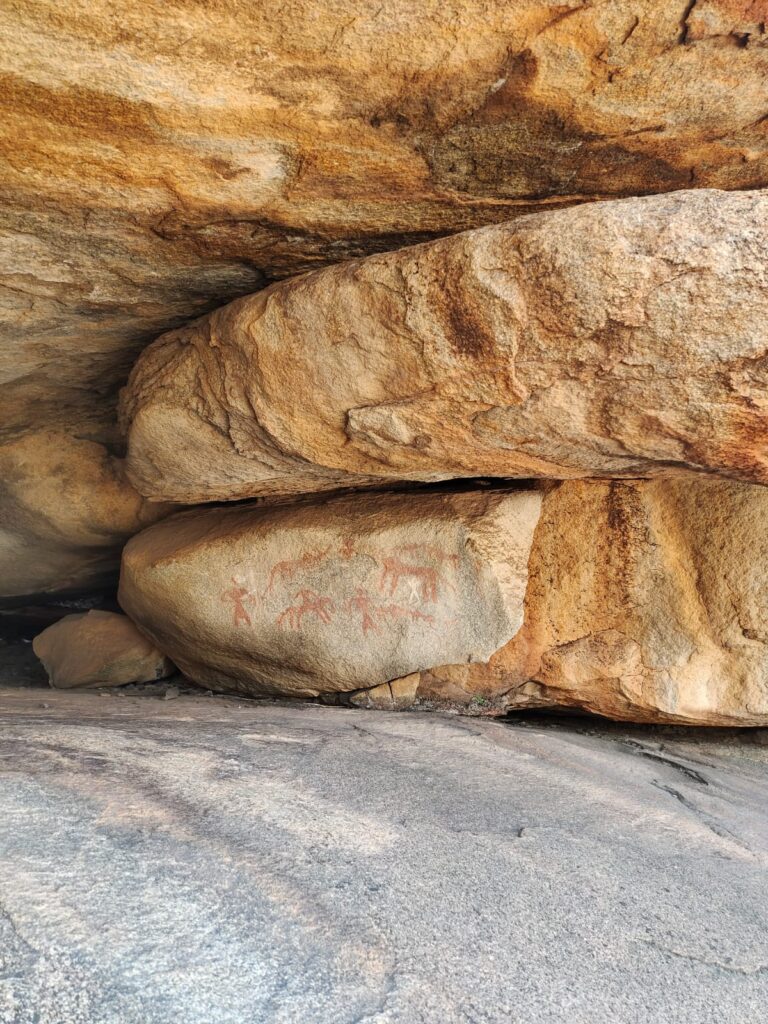
Is history collective? Is it individual? Is it both? Or is it neither?
These questions flooded my mind as I traveled. Who decides what history is given to whom? How do I know what is “mine” and what is “yours”? Is being born to the land enough to claim ownership and identity, or is it an emotional connection?
As someone who grew up in Goa but isn’t ethnically “Goan,” yet feeling that my identity is deeply rooted in this soil, I often wonder where my place in this timeline lies. Did the artists make these carvings for people across borders, or was it meant only for their descendants? Are we part of this lineage because we are Indians, or is it even more territorial? Do I have a right to claim any connection to the legacy they left behind?
History is changing. It shifts from facts suited to personal views to the complete erasure of others. We create history in our day-to-day lives. What was once a boot, worn and scuffed 300 years ago, is now a museum display.The happy days,violence of those times and the life the child lived are all balled up in one stark image of a boot- closed, untouchable display. Is my toothbrush going to be part of some ginormous story in history? Or will it be forgotten somewhere in a landfill, never disintegrating or decaying? Who gets to decide whether my ‘mundane’ life is less or more or even further— ‘theirs’?
I have so many questions and almost no answers. But I mean, whose history is it anyway?
Christina Dedhia