
Part – 1: An Illustrious Legacy
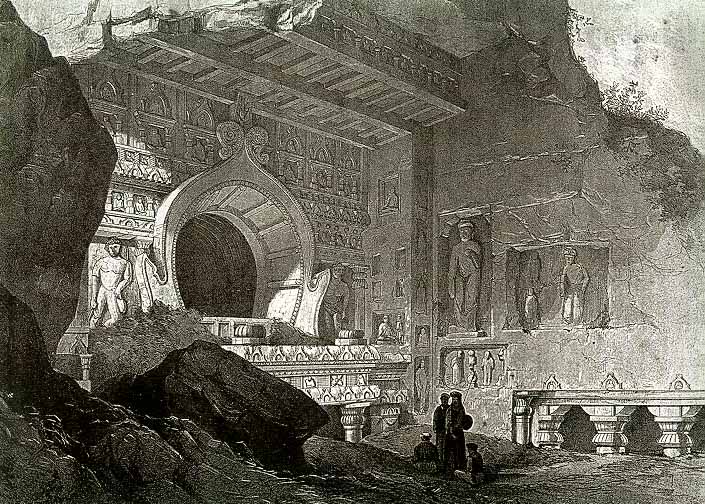
Kalanam Pratamam Chitrm
Dharma Artha Kama Mokshadam
Manglya Pradam chaita tad gruhe yatra Pratishtitm
Of all arts, the best is Visual Arts
It is conducive to attainments of virtue, wealth, pleasure and liberation
Wherever it is established, at home or elsewhere, it is a harbinger of auspiciousness
Chitrasutra, Vishnudharmottara Purana
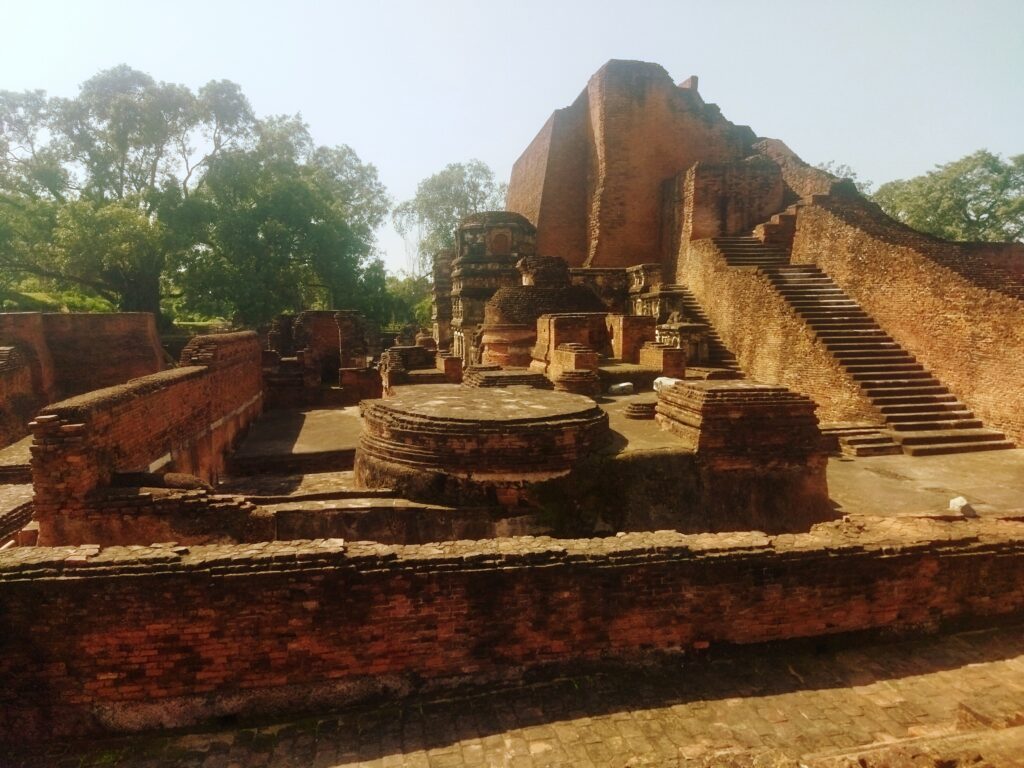
Pedagogy in India traditionally prioritized holistic development as an approach towards knowledge transference forging the bond of lifetime. Together the Teacher (Guru) and Student (Shishya) embarked upon a journey of scholastic pursuit based on discourses (tarka – vitarka) and practical experimentations. The Vedic Gurukula system based on residential model of imparting education focussed upon building the student’s moral fabric through discipline, practice and community living. This was continued through systems of Monastic education followed at Ajanta, Nalanda and other centers. One of the earliest and longest serving University in the Indian subcontinent, Nalanda Mahavihara became an epicenter of scholastic development that had tremendous impact across Asian countries, garnered by cross-cultural exchange. The multidisciplinary curriculum included linguistics, medicine, logic, mathematics, astronomy, alchemy as well as the creative arts. The center consolidated ancient knowledge systems with new findings, but underwent repeated plunders over time leading to eventual migration of scholarly monks in order to subsist and proliferate the teachings.
The sophisticated artistry we witness in Monastic Caves like Ajanta, Ellora, Bhaja, Karle and others, speaks of a long-standing amalgam of expertise carried through generations. Chitrasutra – the third section (khanda) encyclopedic volume of Vishnudharmottara Purana is the earliest textual record (5th-6th century CE) that reveals theoretical and practical knowledge of temple construction, sculpting and painting. Named after the first line of the Adhyaya, ‘atah param pravakshyami Chitra-sutram tavanagha’ meaning “the legacy of the collective wisdom of the finest minds”, Chitrasutra was discovered in the form of manuscripts in Devanagari, Sharada, Bengali, and Newari scripts. Crucial documentation on the artistic practices and aesthetic concerns of the indigenous artists, it was later translated into English by Stella Kramrisch and further interpreted by Ananda. K. Coomaraswamy.
In the oeuvre of ancient Indian Art names of artists remain unmentioned, although in certain instances the patron may be traced. Prof. Deepak Kannal in his book ‘Lupadakhe-Unknown Master Sculptors of Ancient India’ co-authored with Kanika Gupta mentions – “Indian sculptural world emerges through deeply-routed art centres from which arose long lasting sculptural lineages. Each of these lineages which interacted with each another giving birth to more lineages, consisted of several guilds.……These guilds and sculptors moved far and beyond their original lands in search of commissions taking with them the principles, anatomical ideas and markers of the lineage they belonged to.” The skillsets imbibed by artists helped them sustain and transmit knowledge across generations in the form of closely guarded oral instructions, that reinforced livelihood opportunities and established a cohesion of shared identity among its members. Despite upheavals of dynastic shifts this structure of artists thriving as a close-knit community prevailed.
Heterogeneity of artistic practices was not a new phenomenon in the Indian subcontinent if we look back at the aesthetic convergence of Greco-Roman principles evident in Gandhara, which eventually fused into the indigenous practices during the Mauryan (under Ashoka’s rule). Cultural confluence continued through political invasions and colonization by Islamic dynasties and European merchants, adding to the eclectic fiber of artist communities. The visual language that came to fruition due to this conglomeration connected India to a wider array of cultural traditions and aesthetic brilliance in the world.
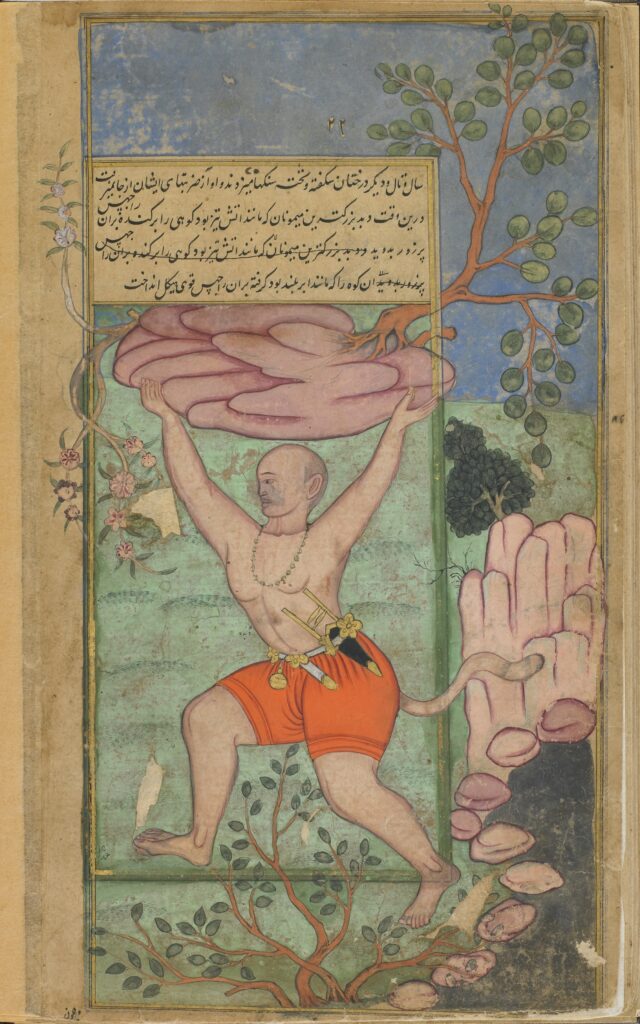
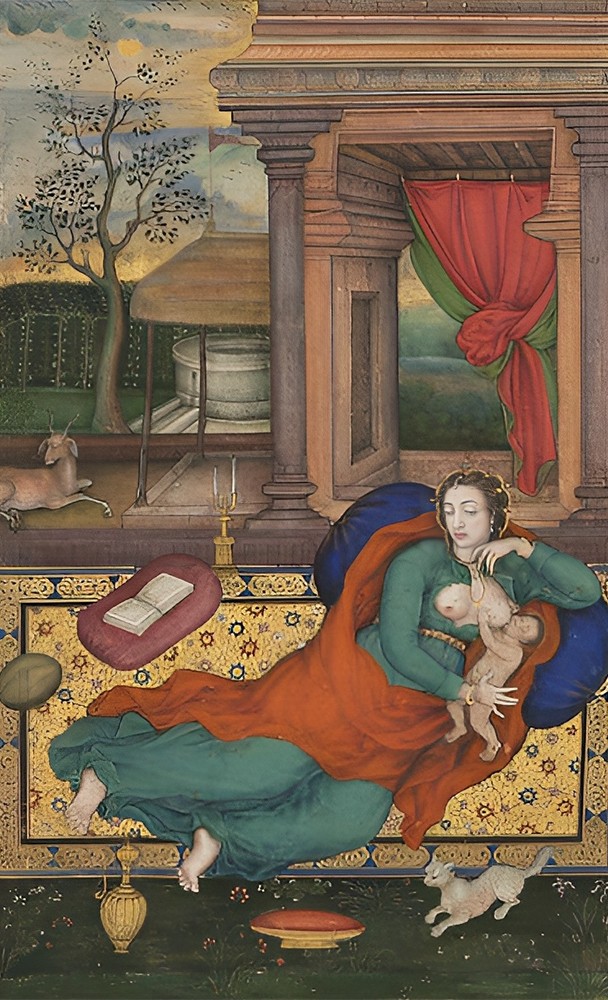
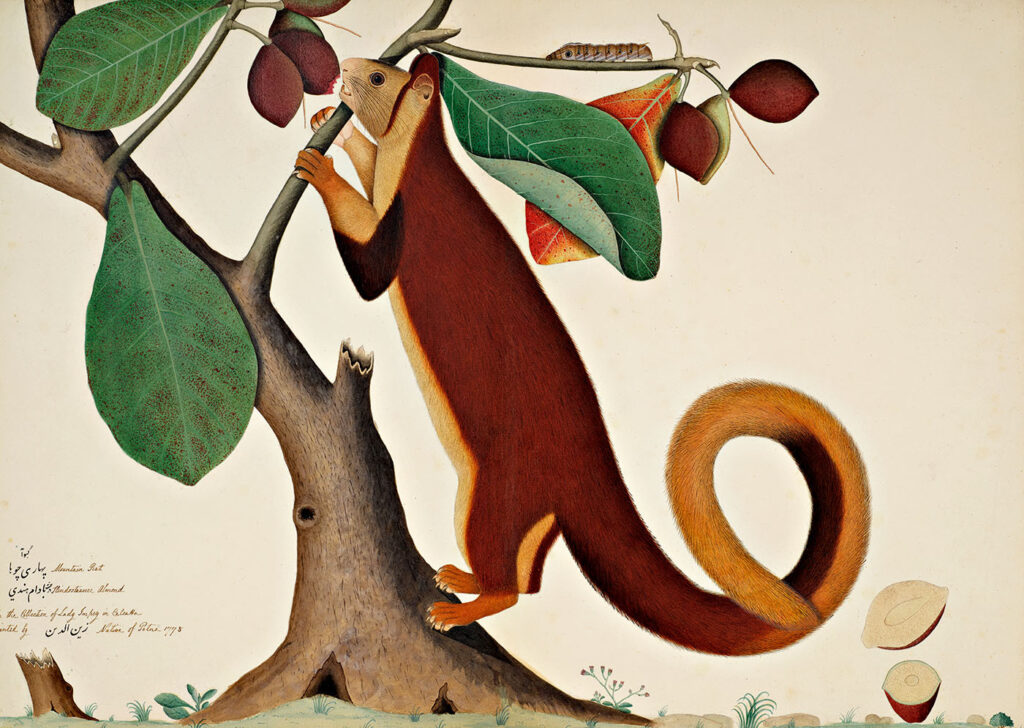
The Mughal atelier is a prime example of this convergence where painting traditions of Rajasthan and Persia adapted European creative principles, to bring forth philosophical narratives of wisdom from across religions, under royal patronage and connoisseurship. European merchants who visited the Mughal courts for trade eventually adapted this system of nurturing to preserve and proliferate creative traditions. As European colonies expanded and strengthened, it became essential to train local artists and artisans to facilitate commercial gains. By mid-19th century, India became a stronghold of the British East India Company. Artists who had earlier worked under Indian patrons were now commissioned by officers of the East India Company, leading to a new form of Indo-European artistry known as Company Paintings.
A specific example of Indo-British artistic collaboration is the ‘Bihar School of Athens’ established by Charles D’Oyly in Patna (1824) with a group of Europeans and Indians. D’Oyly’s objective was to create an artistic society in the framework of the Royal Academy of London, where old masterpieces were copied alongside painting precise impressions from nature. Local artists soon joined this group, followed by others from places like Benares and Murshidabad in Bengal. Though diverse in ethnicity and religion, they shaped a unique artistic language known as the “Patna Kalam” fusing court-painting methods of the Mughals, the Nawabs of Murshidabad and European techniques of realism. D’Oyly also imported a Lithographic press from England and established the Behar Lithographic Press which published several volumes of printed illustrations for which he was assisted by indigenous artists trained under him, thereby prompting a new direction in machine-generated mass production.
Moutushi Chakraborty
Image References:
Pl.1. Lithographic Print Illustrations from ‘Rock-Cut Temples of India’ (1845) by James Fergusson. http://www.kamit.jp/08_fergusson/xroc_eng.htm
Pl. 2. Nalanda Mahavihara, Rajgir, Bihar. Personal photographic collection of the author.
Pl. 3. Hanuman – painted illustration from Valmiki-Ramayana – Mughal atelier of Akbar (1597-1605), Freer Gallery of Art Collection. https://asia-archive.si.edu/object/F1907.271.173-346/
Pl. 4. Mother and Child with a White Cat: Folio from a Jahangir Album (1598), attributed to Manohar. Met Museum Collection. https://www.metmuseum.org/art/collection
Pl. 5. ‘A Malabar Giant Squirrel (Ratufa Indica) in an Almond Tree’ by Shaykh Zayn al Din, Impey Album – Company School, Calcutta 1778. Collection of Museum of Fine Arts, Boston. https://collections.mfa.org/objects/698969