
Human psychology is complex, and understanding the twists and turns of personality traits and shifts in behavior can take a lifetime. Even when you learn to expect something, there are newer and more appalling situations and ways in which people can shock you.
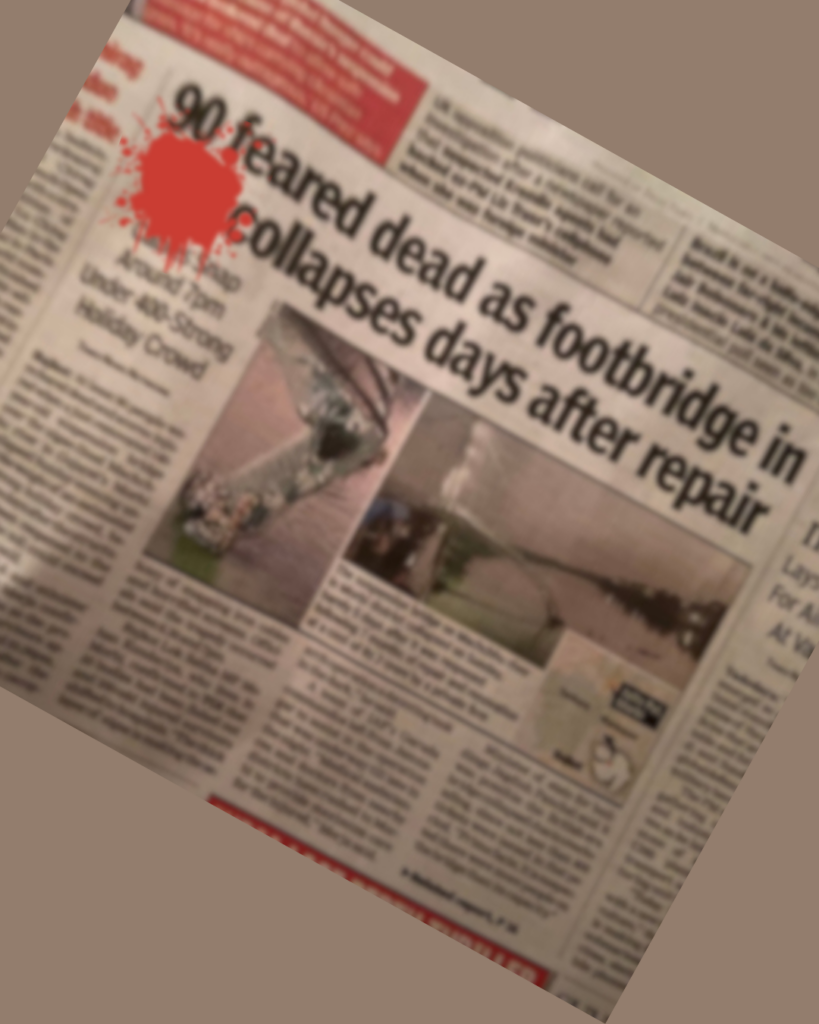
Living in India, look first at the social-community level, where the gap between the haves and the have-nots is huge, and survival is a constant strategy in cities and towns strapped for resources; we are constantly forced to see the uglier side of human nature. We hope and wish that standards and values are held high, but we face examples of corruption, cheating, scamming and general disregard for basic regulations. One pays bribes for the simplest processes, one has to stand by when bridges crack, buildings fall or burn, and even lives are lost because violations have been turned a blind eye to. The news is full of stories recounting acts of unethical and criminal behavior even. We learn to expect the worst, and are so used to it that we have turned numb to these happenings.
It is not that ethical systems are non-existent, it’s more that these are made malleable for convenience and become relative to the situational context. A ‘sab chalta hae’ (anything goes) or ‘swalpa adjust maadi’ (just adjust a bit) attitude, where the problem is overlooked rather than confronted and rectified.
It is a condition wherein the onus of accountability is shifted a little, where the moral compass is relegated to a gray area, and the blame for one’s misdoing is placed on someone or something else’s behaviour or actions. Often, money is involved somewhere in these human transactions, a driving force in bending rules.
Take the arts and culture sector. Unregulated by any systemic framework or authority, bad practices are rife, and anomalies in legal/artistic rights are often swept under the carpet. Young artists and indigenous practitioners are routinely exploited, plagiarism and outright copying plagues writers, blatant stealing of concepts and ideas, as well as hijacking of intellectual property is a common experience in curation and research. Though social media has helped in voicing protests (at times anonymously) and sharing crucial information, after more than twenty years in the field, I have had unpleasant experiences as recently as last year and last month. Let’s not leave out ethical conundrums on social and national scale, that appear in matters of representation and selections, with biases colouring presentations in museums and cultural spaces. I continue to help and counsel those who have the bad luck to encounter unscrupulous people and organisations, those who are often easily able to justify their actions in positions of seniority and power. I frequently convince others to push for proper paper-work, and add clauses and notations to my own contracts every time a new type of ethical lapse occurs (the list keeps growing).
In a small, intensely competitive and limited network of the arts industry, it can be a challenge to call out peers, colleagues and mentors on bad practices, and the best one can do is to address it privately, maintain distance and strive and do the opposite in one’s own professional circles.
I reached a point where I had to ask, can there be something like being ‘too ethical’, or having an excess of scruples? Can one be overly fair? I feel at times that I would fit better into certain spaces if my ethics were more malleable, if my conscience didn’t prick me hard for even thinking of something not exactly right for someone else, even if they would never know. I’m sure many of you out here have felt similarly!
Lina Vincent