
There is a grand Jamun tree in my neighbour’s yard, that I pass by on my walks. During the fruiting season, the earth below it gets stained the deep purple of the fallen berries. As a rather morbid yet poetic response to the violent happenings at India’s borders, I began to consider the way the earth must retain physical and intangible traces of conflict; memories of persons who have walked there, bled, died, become one with the universe. What are the conflicts for, both here and elsewhere? Ownership of land, political control, nationhood and patriotism – these lines have been drawn across landscapes and topographies for centuries, for as long as humans have proliferated and grouped. In a recent discussion on the subject of travelling plants with a fellow historian, the subject turned to folk music and song, and how it is expressed that plants don’t know these boundary lines, but grow the same wherever the seeds find the right conditions. Trees that grow in the Punjab region of India grow in Pakistan too. The people experience the same climate and eat the same food, the rivers that flow through do not stop and jump over an imaginary wall…yet politics unleashes its dominion over free-flowing waters too.
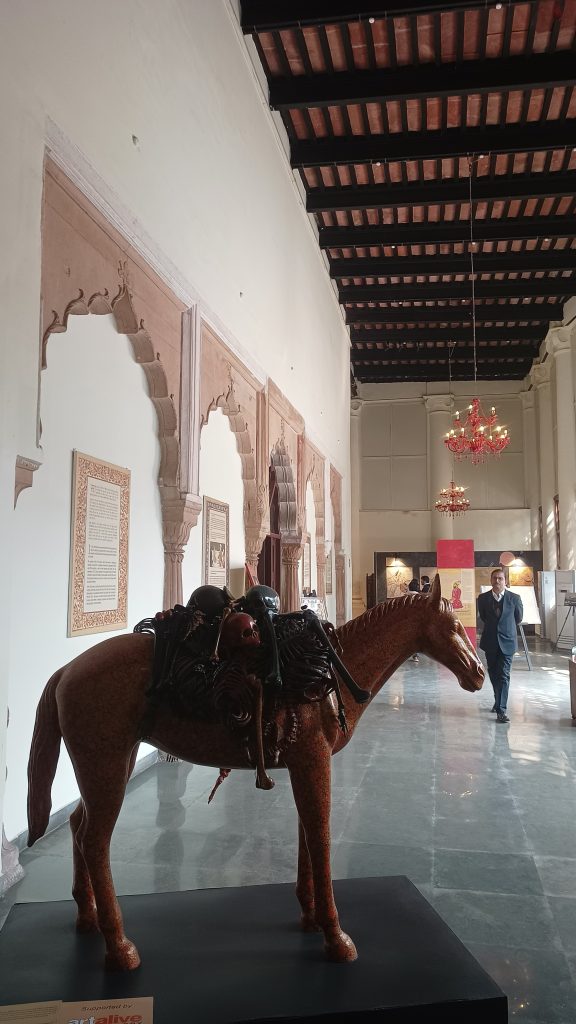
Along with an existing past of colonial struggles, the partition remains one of the saddest and blackest moments in South Asian history. All of us carry a bit of that pain through the secondary knowledge, and families with a history of separation continue to find ways in which to come to terms with the enormity of the tragedy, in which lives were lost, connections ripped apart, and thousands were displaced. How does one begin to accommodate such horrific histories within a museum experience? How does one mediate between social, cultural, political aftermaths of forced migration and communal segregation?
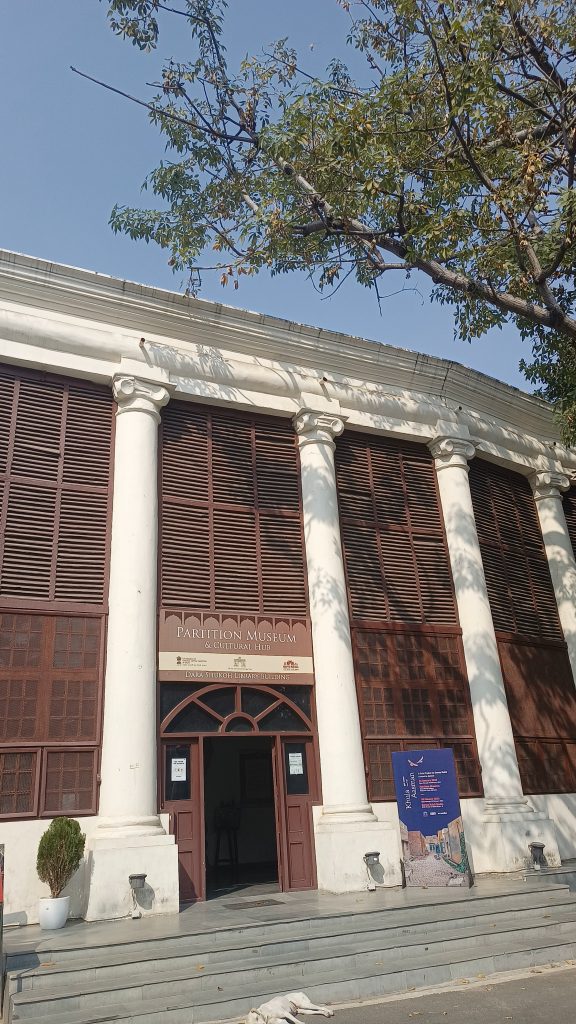
I recently visited the Partition Museum set up in the beautiful Dara Shikoh Library building that falls within the campus of Ambedkar University in old Delhi. Curated in a series of rooms with information panels, films, descriptive objects and interactive installations, the museum expresses the story of this disastrous event of 1947. It showcases aspects of the trauma from both sides of the border, sensitively and with the respect the subject needs. Set up in 2023, this space is the second such initiative after the Partition Museum of Amritsar located in the historic Town Hall. Originally built in 1637 by Dara Shikoh, the eldest son of Mughal emperor Shah Jahan, during colonial times it served as a British Residency, and later as the offices of the Delhi State Archaeology Department. The Arts And Cultural Heritage Trust (TAACHT) took up the building under the ‘Adopt A Heritage’ scheme of the Centre, offered by the Department of Art, Culture and Language, to set up the Partition Museum.
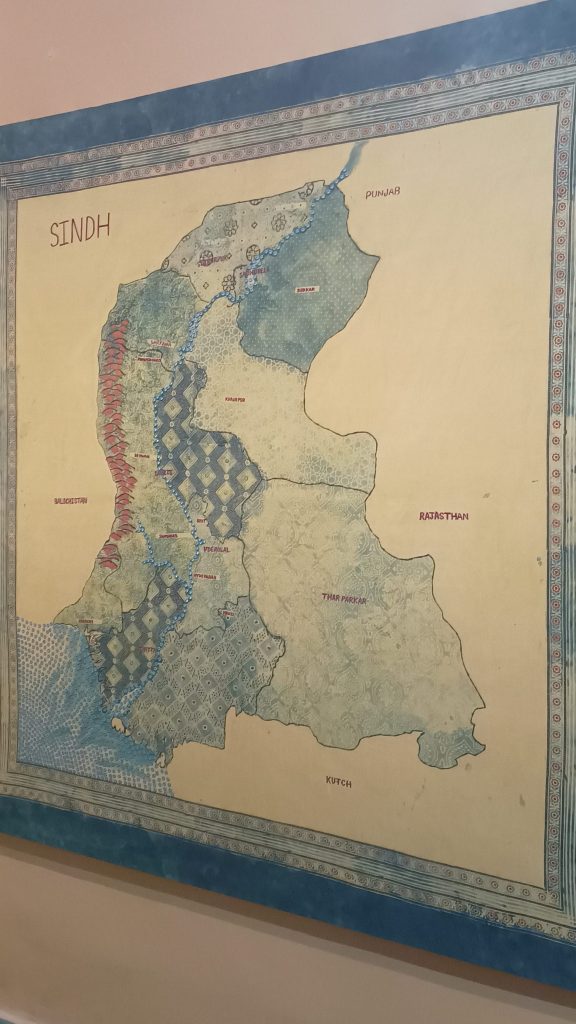
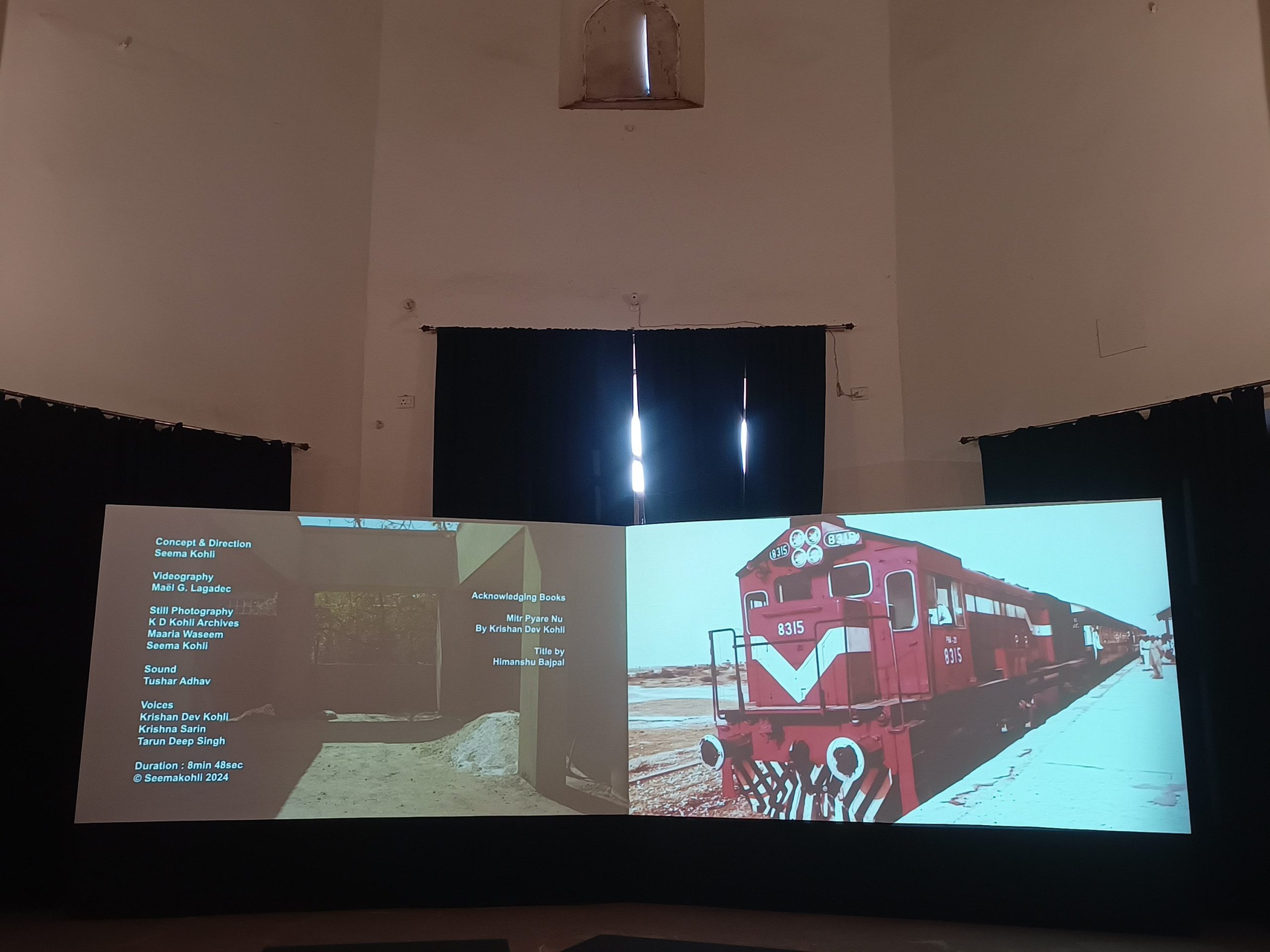
For those who are aware of the history, and for those for whom it is new, the museum offers thought-provoking material. It is in fact overwhelming at certain points, and one needs to spend time, or return on several occasions to do justice – informationally and emotionally – to the entire content. The newly curated section on Sindh is a beautiful, and eye-opening history of the community and its culture. At the library, among the display of contemporary art related to the themes, I also had the opportunity to view artist Seema Kohli’s evocative film ‘Mirroring the Past’ (aks-e-guzishta), part of her solo exhibition Khula Aasman that responds to her family’s partition history, and her personal poetic engagement with memory, identity and ancestral knowledge.
(The Partition museum has been conceptualised by Kishwar Desai, chairperson of The Arts and Cultural Heritage Trust)
Lina Vincent