
Art and communities
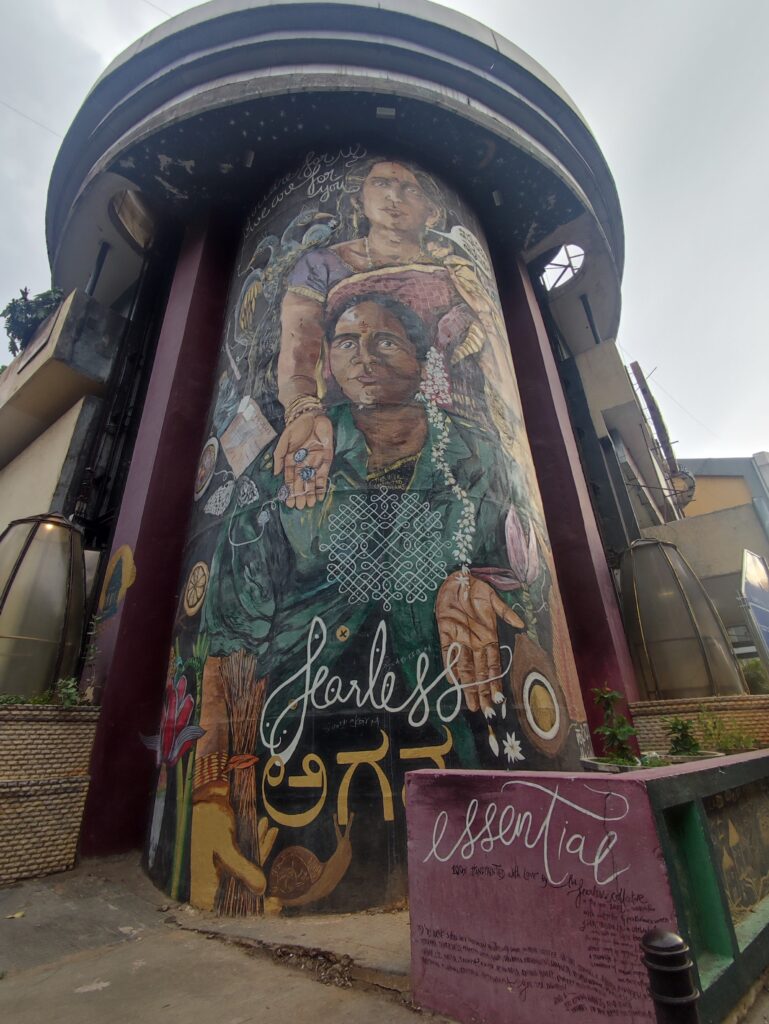
Continuing the discussion that public space is not experienced equally by everyone, it is important to note that some of the most interesting public art projects are those that involve communities rather than simply placing artworks in public spaces. Projects such as the Aravani Art Project and the work of the Fearless Collective show how public art can become a way of creating visibility for communities and experiences that are often absent from the visual language of a city. The mural can place people, their stories and their everyday realities within the public landscape.
This feels particularly relevant in Goa, where tourism has created a familiar visual vocabulary of beaches, palm trees, Portuguese architecture, nightlife and leisure. These images are not false, but they are only fragments of the place. The 2017 St+art Goa project brought other aspects of Goa into Panaji’s streets. The Shutters Project used Goan proverbs and expressions, while the Cut-Out Project presented local personalities and characters.
The 2019 Mundo Goa section of Serendipity Arts Festival took this further, with Solomon Souza’s murals depicting figures such as Sita Valles, Eunice de Souza, Vishnu Wagh and Antonio Figueiredo. These works brought people, language and histories that sit outside the familiar tourist image of Goa into the city’s visual landscape. Public art can therefore expand how a place sees itself and what it chooses to remember.
Beyond the mural
When we talk about public art, murals are often the first thing that come to mind. But in Goa, projects such as The Island That Never Gets Flooded (2023) show how public art can also work through ecology, heritage, memory and sound. Pakhi Sen’s Naikhazan, Kalpit Gaonkar’s The Silent Council and Divesh Gadekar’s ConcHear each offered different ways of experiencing a place. Diptej Vernekar’s Incarnation Park (2022), meanwhile, brought the traditions of Cumbarjua’s Shigmotsav into an urban setting while questioning who gets to participate in them.
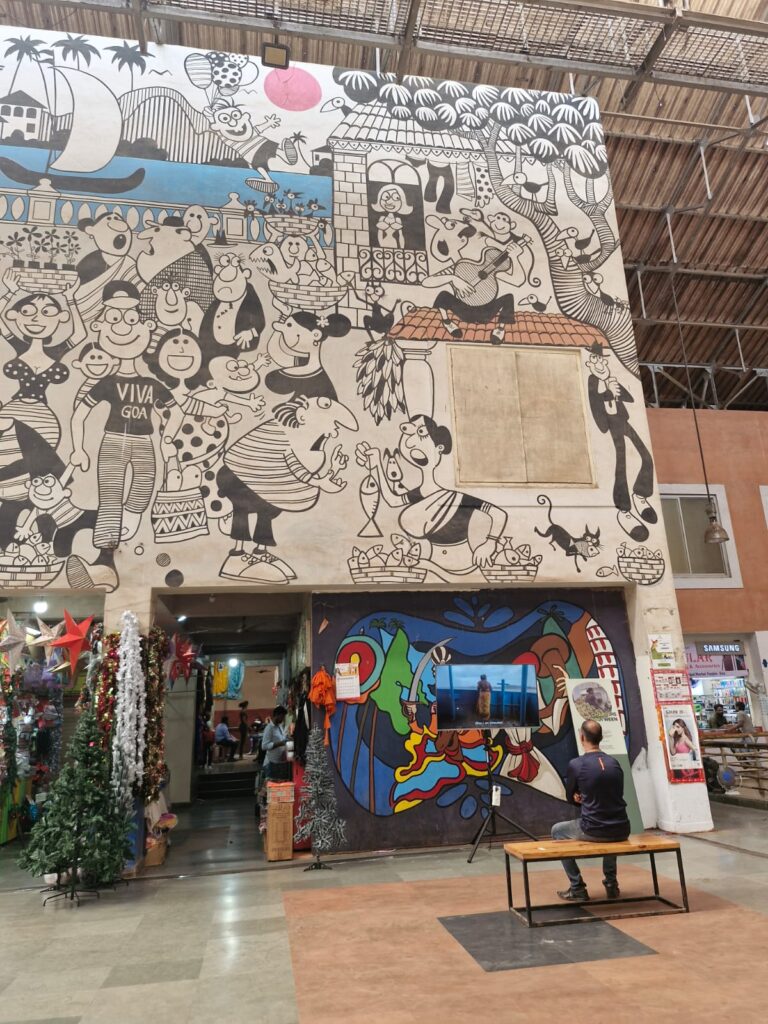
These examples bring me back to the question of Goa’s visual identity. A Portuguese-era building, tourism advertisement, political poster, Mario Miranda illustration or contemporary artwork can all exist within the same landscape. None of them can fully represent Goa, but together they shape how the place is imagined.
Perhaps this is what makes public art worth looking at closely. It adds another layer to a place that already has many histories, communities and ways of being seen.
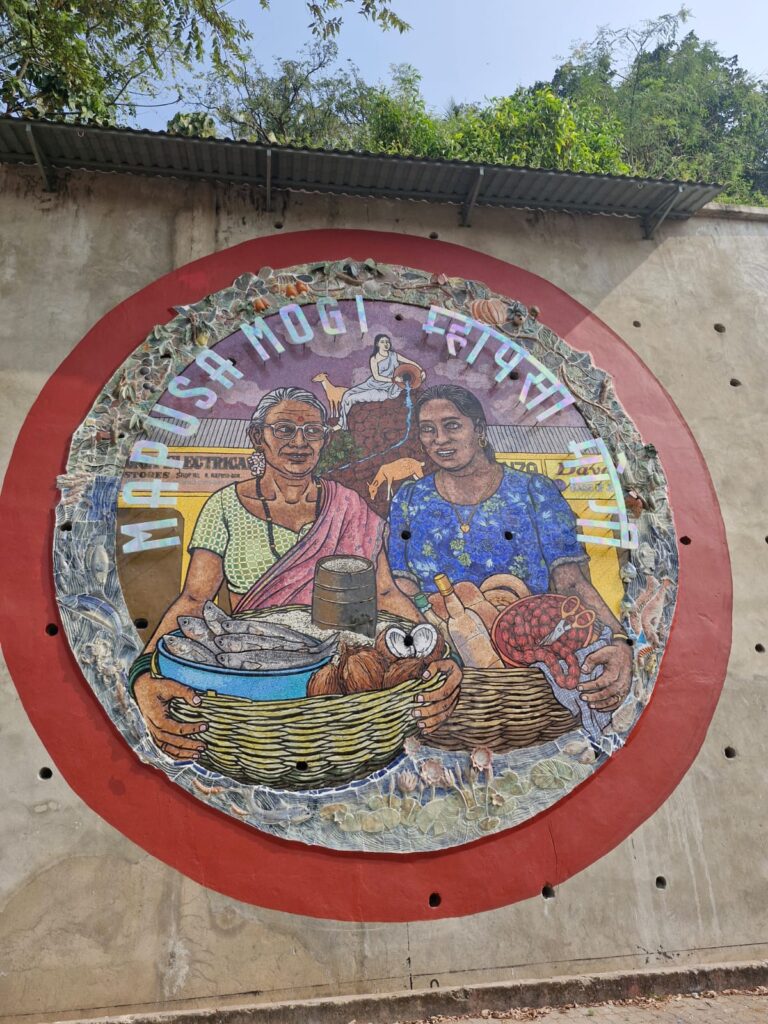
A city is constantly being rewritten. Public art is simply one part of that process, changing what we notice, remember and sometimes question about the places we already think we know. I never expected to think of Mapusa, a town I have spent 16 years around, through its public art. As I follow the ongoing Mapusa Mogi project, I find myself wondering what seeing familiar people, places and memories in a new visual form might make me notice differently about a place I thought I already knew.
Siddhi Arsekar