
An idea is like a seed. Once set in the right conditions, it will grow and grow, and grow, with roots and branches that spread and connect, and flowers and fruit with more seeds, allowing for something much larger to be created, and moving beyond its own life and time. This becomes a suitable metaphor for the project with the Jahajee Bandals, in which the chance connection through a community discussion on creole gardens brought about an interconnection between Trininad & Tobago, Goa, Hyderabad and Bihar.
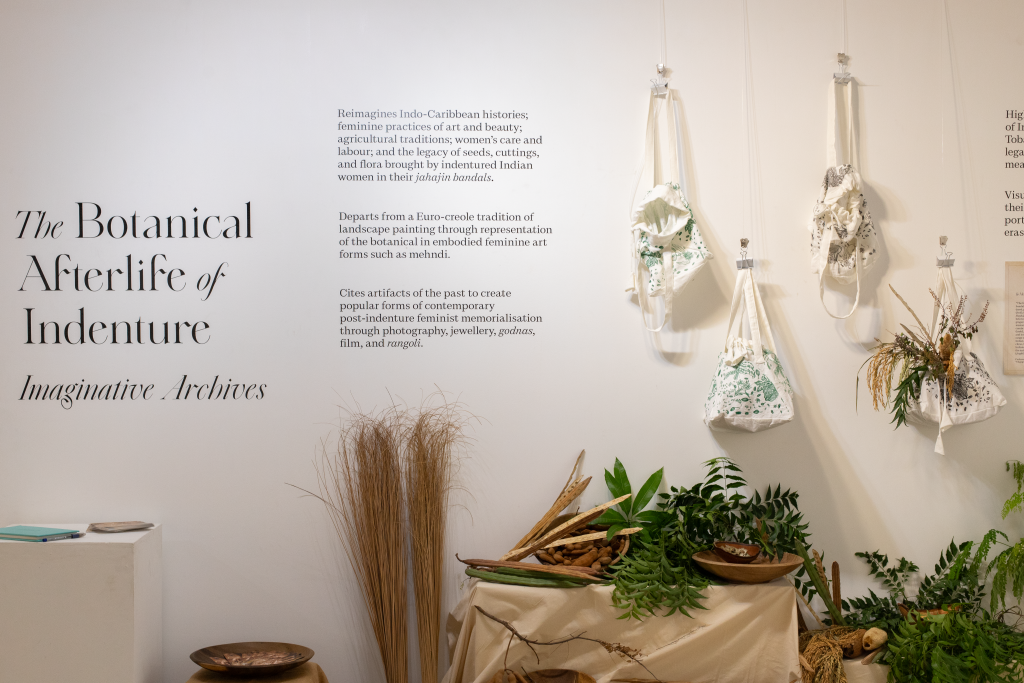
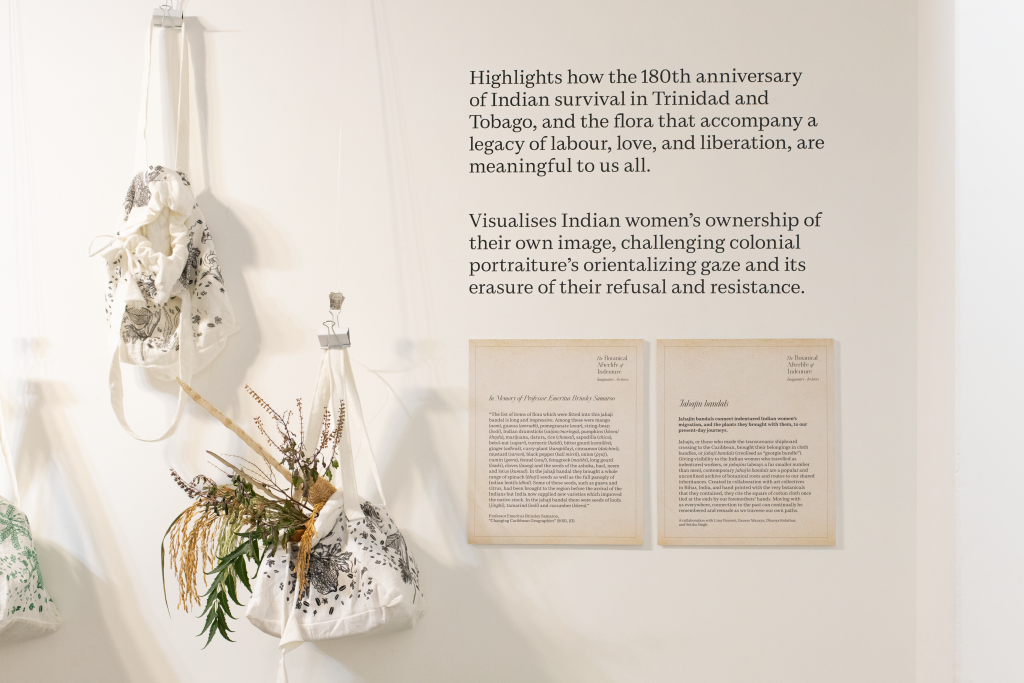
‘The Botanical Afterlife of Indenture: Imaginative Archives’ (hosted at the Art Society of T&T, June 2025) visualised and presented years of research by Dr. Gabrielle Hosein, a professor at the University of the West Indies; the exhibition was co-created in collaboration with photographer Abigail Hadeed. The project studies the stories of indentured labourers, and the organic legacy in the form of seeds, cuttings, spices and the medicines that were part of their journey, packed in the cloth ‘bandals’ for the travel across the waters in ships Jahaj. This legacy remains as part of the landscape and experience of the land even today, where plants such as pomegranate, moringa, ochra, tamarind, and mango migrated along with people and their culture. The subject of ‘travelling plants’ was already deeply embedded within my research through an exhibition of the same title that I have curated.
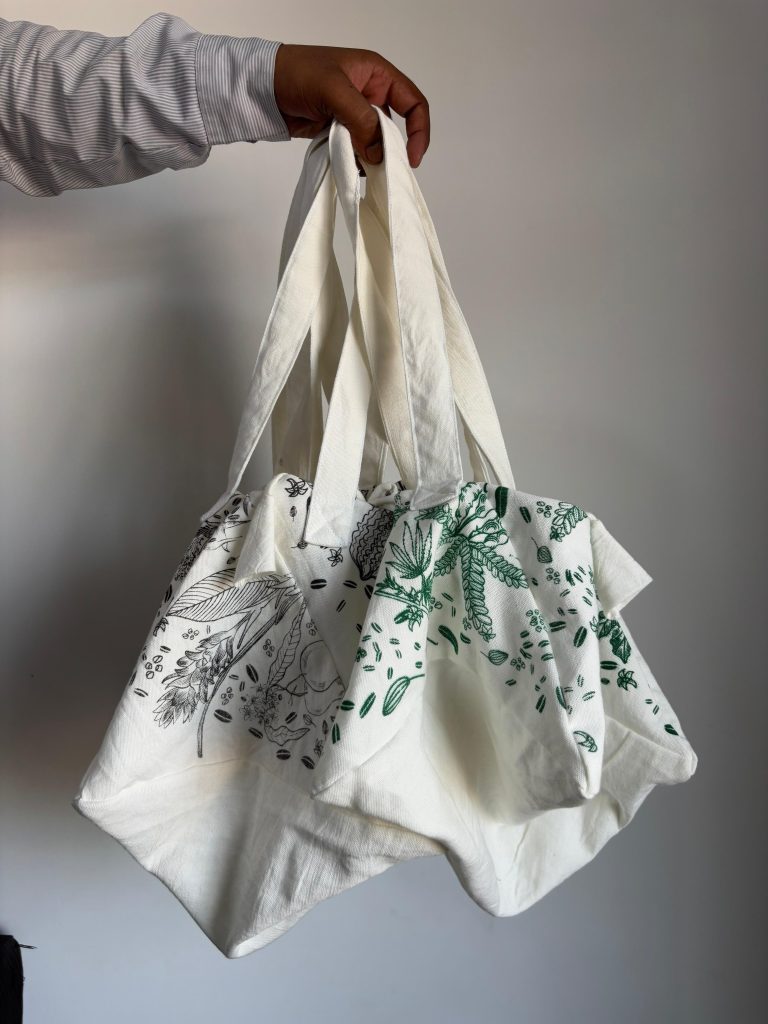
Early in the conversations, the idea was to create a bag-form that symbolically echoed
the ‘bandals’ that would have been carried by the people, with imprints of the
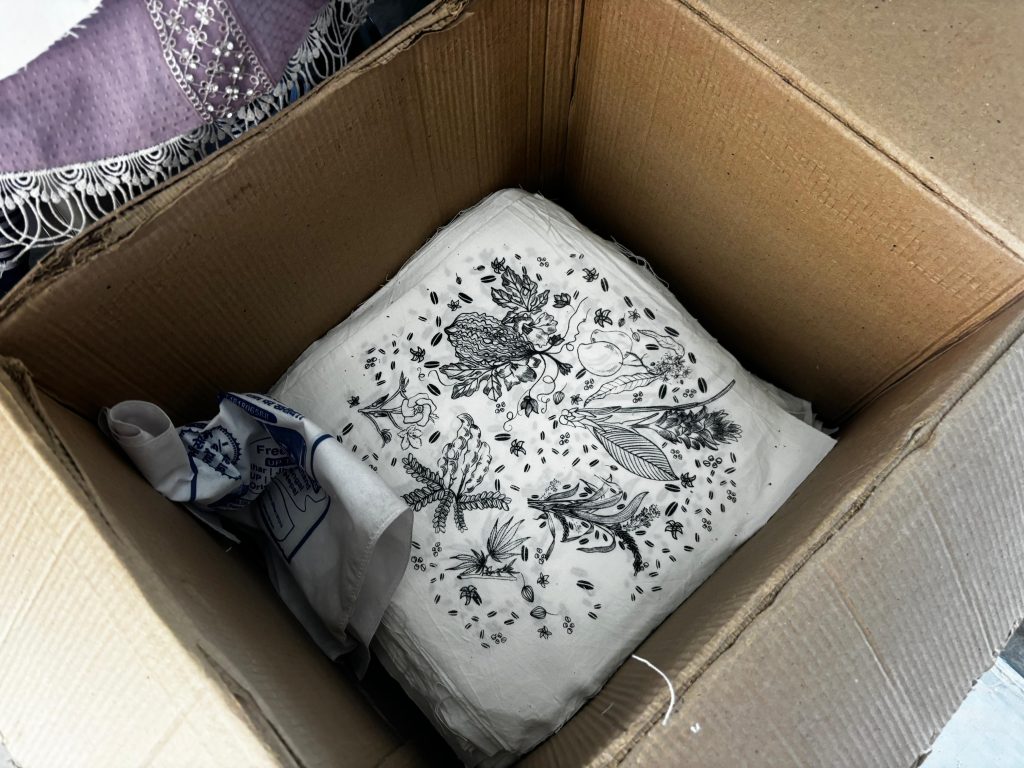
botanical materials they took along adorning the surface.
With printmaking at the core of the discussion, the ideas grew to involve textile practitioner Dhanya Kolathur, who developed a meaningful design, with overlapping fabric recollecting the way clothes are wrapped and tied – with minimal use of cloth. The idea of working with the community in Bihar, from where many thousands of would-be labour left India in the latter half of the nineteenth century, became part of the possibilities.
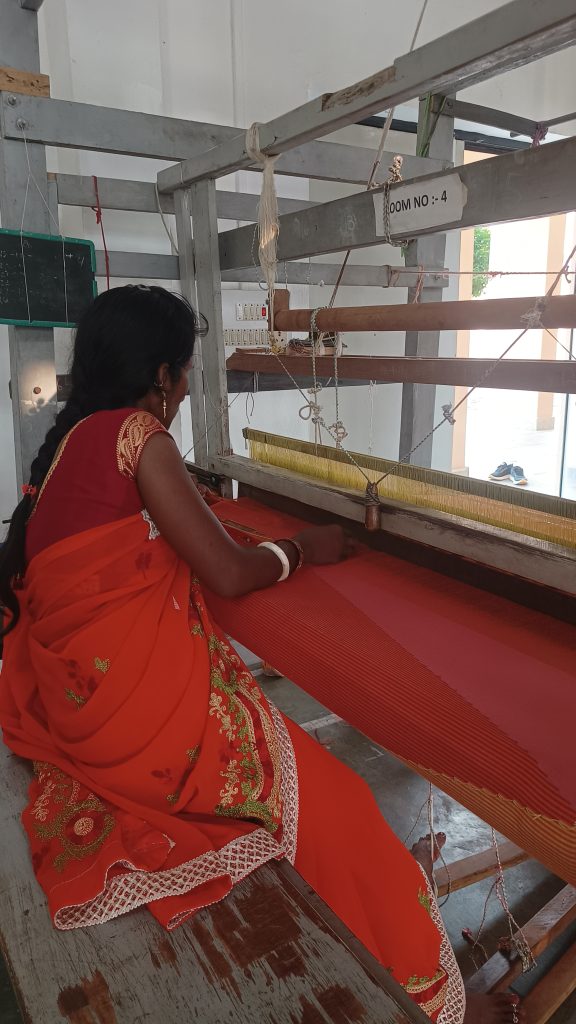
Since I was curating a workshop at Parivartan, in Siwan-Bihar, the proposal organically turned to collaborating with the women there who were weaving fabric as part of the unit Sabrangi, founded by Setika Singh. This is part of Parivartan’s larger area of work with community empowerment and social and cultural upliftment of the people in the neighbouring villages. The local research was handled by Gaurav Maurya, the coordinator at Parivartan. An artist himself, Gaurav engaged deeply with the context and story of the bandal, making it possible to create samples of the bag and the printing of the botanical designs. The bag was planned to be stitched from a strong khadi cloth that is woven in Jamalhatha near Siwan. (This traditional weaving community on the brink of disappearance has been revived by the work of Parivartan and they now earn their livelihood by producing cloth for the uniforms of several schools.)
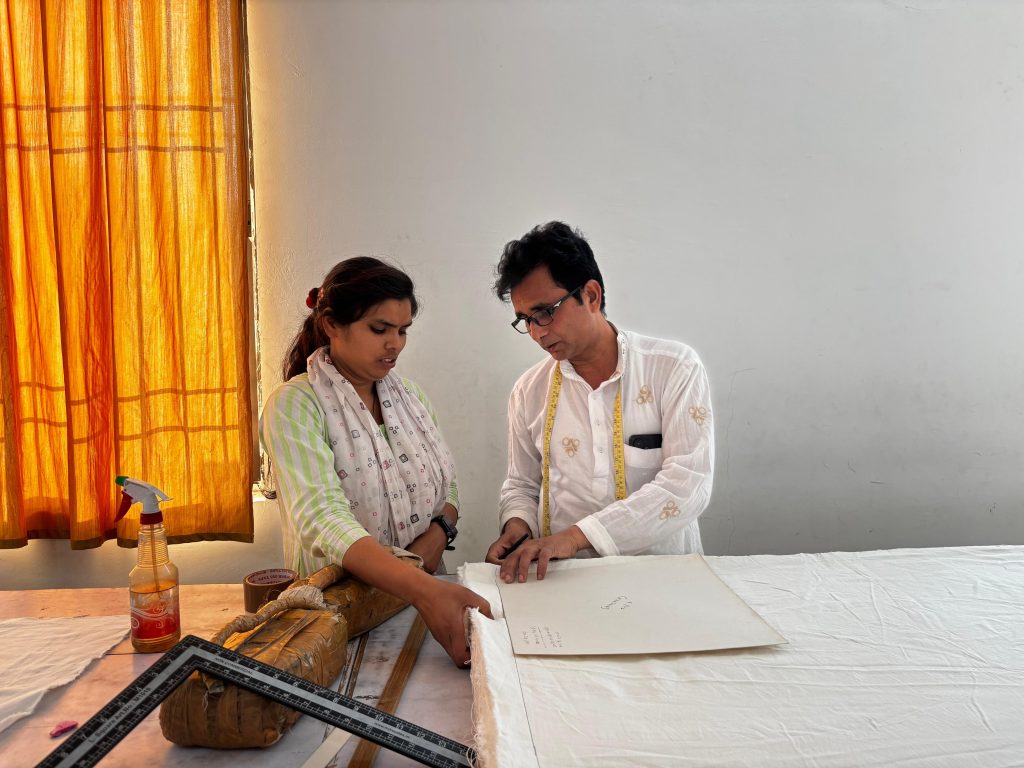
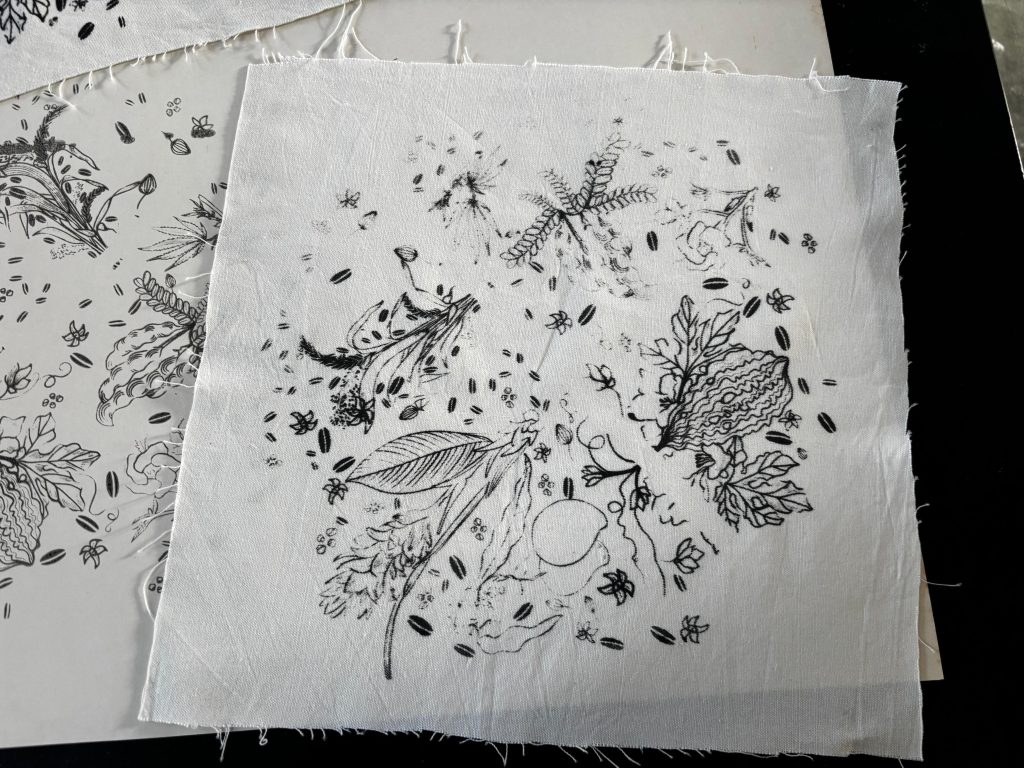
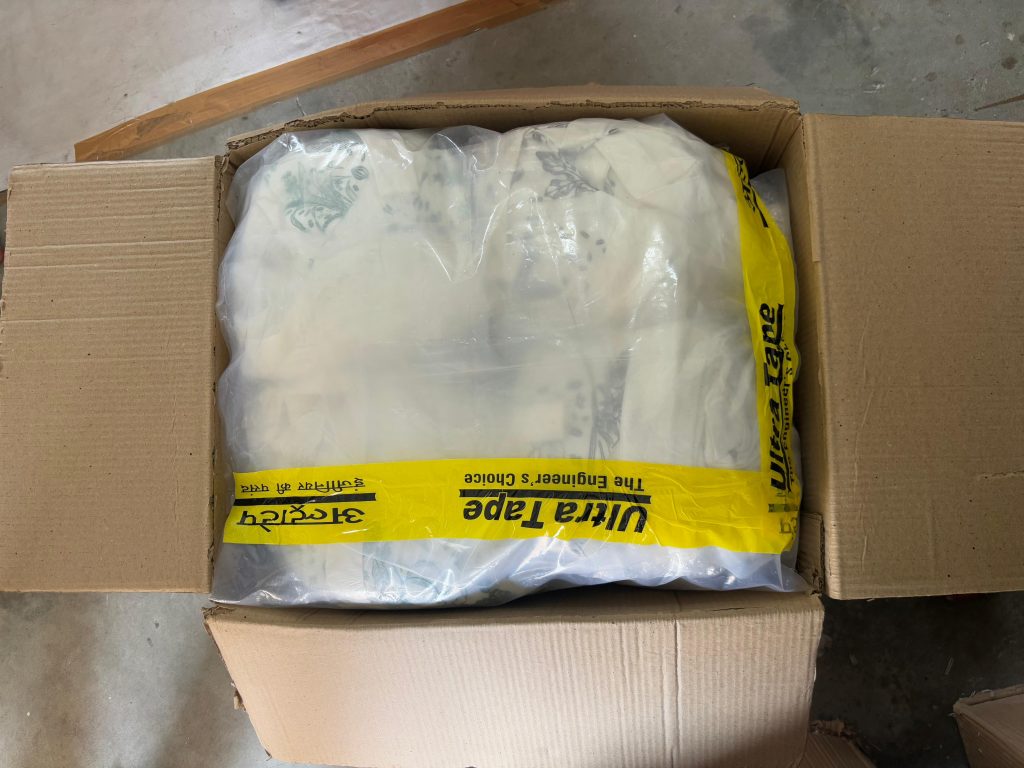
The design motifs and layouts were made by Bangalore based artist and educator Samyuktha Rao, with reference to the patterns already researched as part of the show. These were standardised and made into a pattern that would be suitable for screen printing on the cloth panels. The screenprinting was finally done in Patna, and the panels were cut and stitched together to form the botanically adorned ‘bandals’ that once again took their journey across the seas to Trinidad and Tobago, making a repetition of a historical journey but with new purpose.
Gabrielle Hosein shares, “Curator Lina Vincent, working with Dhanya Kolathur, Gaurav Maurya, and Setika Singh, collaborated with the Botanical Afterlives of Indenture: Imaginative Archives project over nearly a year to produce jahajee bandals, or cloth bag that could be popular art objects visually memorialising how indentured Indian workers travelled with plants to the Caribbean. The bandals could move out of the gallery and travel in the landscape with which they are connected, bringing mobility to their capacity to initiate dispersed stories about the legacies of Indian indenture. Part of a wider exhibit which included rangoli, jewellery, mehndi, film, and photography, the bandals were part of the exhibit’s drawing on folk forms as well as botanical histories to create contemporary Caribbean art. However, uniquely, the bandals were the only artwork created through trans- oceanic collaboration with India and, especially, Bihar – once the homeland of so many indentured Indians.”
Lina Vincent
Thanks to scholar Ananya Jahanara Kabir for creating the original connections that in turn grew out of my Exhibition ‘Travelling Plants’, for Goethe-Institut Chennai. The project was realised remotely, with only Lina Vincent and Gaurav Maurya able to meet in person.