
In August 2024 I had the opportunity to watch a Lavani performance at Divar, Goa. Titled ‘Lavani Ke Rang’, it offered a glimpse into the world of traditional Lavani artists through a story of an enigmatic and quirky theatre ‘Malkin’ from the Sangeet Bari tradition. She takes the audience on a journey of their theatre rules, traditions, private performances, and a practical outlook towards their art. The production attempted to throw light on the various unknown facts about the traditional performative art and give the Lavani artists the respect and space they deserve.
Historically, the genre of the Marathi love lyric, lavani (lāvaṇī), and its emotionality reached its greatest popularity during the turn of the nineteenth century, receiving broad popular support as well as patronage from the Maratha State. It is often contrasted with the povada (povāḍā), defined essentially as a heroic ballad that recounts the feats of larger than life historical persons. The two have been seen in tandem, paired for their characterization of masculine valour and feminine eros. (excerpt from ‘Performing intimacy: slavery and the woman’s voice in eighteenth-century Marathi lavani’ by Kedar Kulkarni)
Interestingly, when we think of lavani in popular culture we automatically reminisce ‘apsara ali’ and unknowingly / knowingly dive into the eros part of the dance. Over the two hours of the event, the audience was enthralled with the dancers and musicians, each being so unique but also familiar. They spoke of different themes and people, each casually and sometimes not so subtly hinting at underlying politics, contemporary issues, and gender equations. As the show came closer to an end, they opened up the audience to give suggestions on what they should perform. This was done in the usual manner where they said they’d perform and dance and also accept money in return.
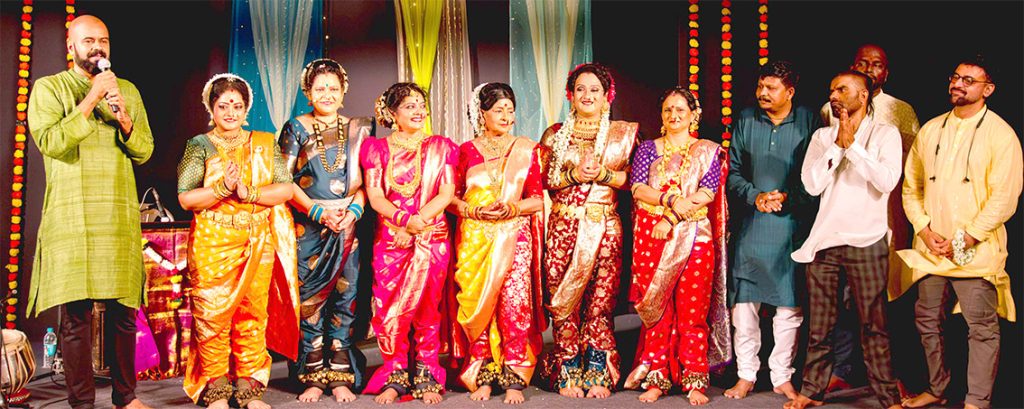
As we’ve all learnt over the past few years about privilege and how money can make one seem larger/ smaller than another person, everybody became apprehensive so as to not insult the performers, especially since the performers are female. Our apprehension was noticed and immediately it was followed with ‘hum paise lene mein bura nahi mante’ (we do not find it bad to accept money) & ‘kitne kanjoos log hai’ (what misers you people are). Half the crowd shared an awkward laugh while somebody came up with crisp notes and asked for a song.
The boldness and gracefulness the ladies showcased in their work was phenomenal. At very many instances they pointed out blatant patriarchy at work in our modern day world and very casually made it clear that they were no less than men. They very pridefully (in all the good senses of the word) stated that their children follow a maternal naming format – not allowing a father’s absence to be the cause of any shame whatsoever. The women rise to the occasion every time, taking all responsibility and do so exceedingly well.
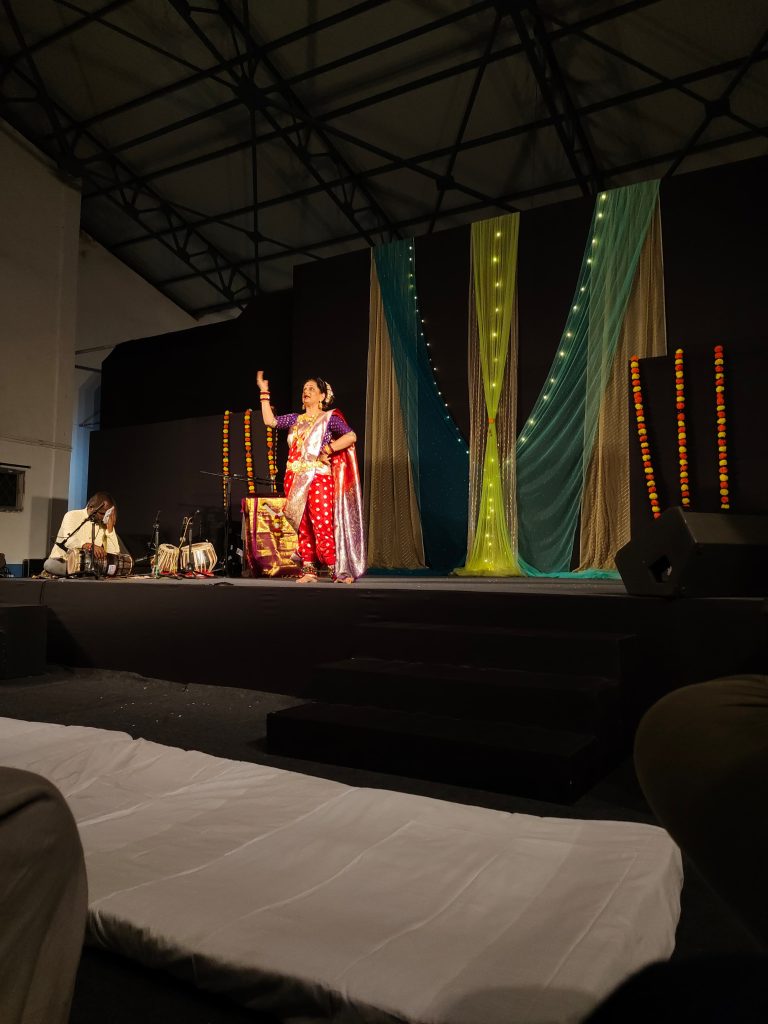
In contrast, while visiting a rural town in Bihar in October last year, I happened to come across something that was personally rather shocking and absurd.
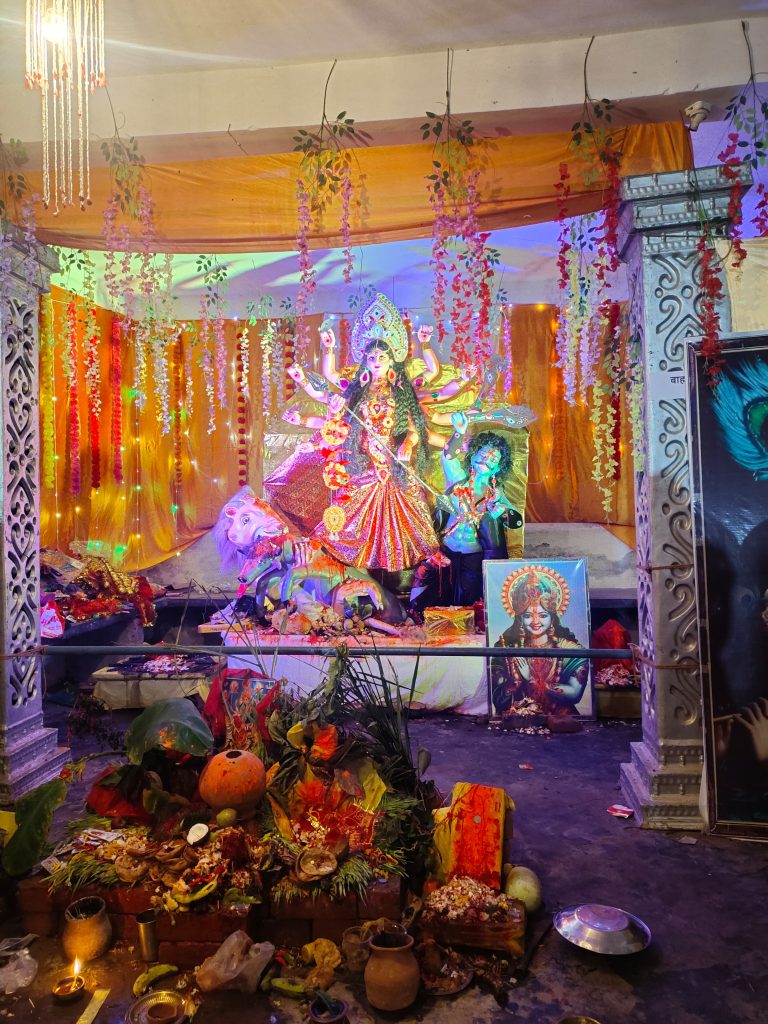
This was during the Durga Puja week and on the last day we decided to visit a nearby town approximately an hour away from where we were. While on the way back, we got caught in a traffic jam that seemed to pop up out of nowhere.
Turns out, it was 3 trucks followed by hundreds of men holding swords. On these trucks, women danced to some item songs wearing outfits that seemed rather scanty. This continued for about 20 minutes till the trucks passed by, each more crowded with followers than the last. After about 5 minutes of passing the crowds, a Durga idol followed behind them with 5-6 people around it. When we asked a local why the idol followed the trucks, they said it’s ‘usual here’.
I was baffled by the absurdity of the occasion and co-relation of the festivities we saw. We did also see a traditional Durga Puja at a temple, so the above scene was rather surprising. What I can comment on is an outsider’s view on how women in different sections of the world, in this case united by dance? seem to follow two very different paths- irrespective of whether I agree with one or the other.
People have the right to wear and do as they please ; it doesn’t mean that you would follow my views on the subject. I think it’s an interesting overlay of histories being made. Each more different but somehow also following an age old view of women as objects. Whether they feel that way or decide to fight against it is where we all decide to participate from the outside, keeping our discussions secluded into smaller circles.
As we celebrate Women’s Day these experiences become significant for me- pointing out two different sections of feminine presence in society today. All these women seem to be making the most of what they’ve been given and yet somebody like me decides that I should have prejudice against a certain kind- only because of what I think is right or wrong. Privilege can be a dangerous thing- sometimes creating black or white surfaces only. The above instances remind me that I may have privilege but it doesn’t give me the right to decide whether it was right or wrong, let alone claim that one is better than the other. The absurdity still exists but it also shows me, once again, that there is always a grey area in socio-cultural spaces and how I navigate it makes me a woman that I aim to be. After all, women aren’t just objects that speak.
Christina Dedhia